With the world increasingly transcending into the digital world, cybersecurity matters more than ever to protect online presence and activities.
The increase in smartphone sales, cloud services, and the Internet of Things has advanced the complexity of cyber threats that people and organizations increasingly face today. Emerging technologies, sophisticated attack vectors, and growing demand for privacy and data protection will affect how cybersecurity might evolve in the future. This article explores key trends, the role of artificial intelligence (AI), regulatory challenges, and the evolving cybersecurity landscape of 2024 and beyond.
1. Artificial Intelligence in Cybersecurity: An Edge Sword
Artificial intelligence is now revolutionizing cybersecurity in deep ways. While AI empowers defence through the advancement of tools to track, identify, and respond to cyber threats more efficiently than ever, AI-driven solutions can analyze very large volumes of data in real-time, detect unusual patterns, and automate responses to security incidents. The future will increasingly rely on AI for predictive analysis to give security teams much advance notice of attacks before they happen.
However, the same AI technology that strengthens defence mechanisms is being weaponized against organizations by cyber criminals. Malicious actors use AI to mount more sophisticated attacks, for instance, creating extremely lifelike phishing emails showing fraudsters in control of the affected organization or using deepfake technology to impersonate someone or automate malware to bypass traditional security systems. Perhaps the biggest threat is that AI enables advanced phishing campaigns based on social engineering techniques. As such, organizations ought to invest in AI while preparing for AI-powered cyberattacks.
2. The Changing Threat Landscape
Tomorrow’s threats will be much more diversified and lethal. Now that more enterprises and institutions are making a transition to the cloud, attackers are targeting cloud infrastructure, exploiting third-party service vulnerabilities, and breaching systems that are poorly configured. Cloud services are critically important to business but have increasingly become an attractive target of attack, not when secured with proper security oversight. Misconfigurations, out-of-date software, and insecure access control mechanisms are the primary attack vectors. To prevent exploitation via such vulnerabilities, implementing comprehensive email authentication protocols with analyzer for DMARC can significantly reduce the risk of unauthorized system access.
Another threat is enhanced utilization of APIs, which form the heart of any cloud computing services. The attackers would definitely seek out and take advantage of that one zero-day vulnerability that is yet to be discovered in APIs and gain full access to your organization’s system, which might lead you to serious breaches of data.
3. Cloud Security and Data Safety

With the increasing importance of cloud computing, cyber security strategies must adapt so that cloud infrastructure also comes within their purview. Cloud services, critical to modern business, are also increasingly a target for cyberattacks. In industries like healthcare and scientific research,cloud GPUs are instrumental in handling large data sets, which makes securing these environments even more essential. Lax security can lead to serious breaches, especially with the use of insecure APIs, weak access control, and a lack of end-to-end encryption.
Cloud computing does bring, however, complex issues related to data sovereignty. Today’s data centre is not a border, but borders are there in cases where companies store and process data across borders, creating questions on jurisdiction and data privacy. There is such variation in what is allowed or disallowed on data storage from one country to the other which complicates compliance for organizations carrying business across borders. Privacy-by-design solutions and strict encryption measures will take centre stage to protect data within cloud environments.
4. Rise in IoT Devices
IoT is an enormous threat to cybersecurity. Within five years, in 2025, the number of worldwide IoT devices will hit 75 billion, most of which were never designed with security in mind. From smart home systems to personal wearable devices, none of those ‘smart’ gadgets often comes with built-in heavy encryption, authentication protocols, or even a continuous supply of patching software that could well stop cyberattacks.
The entry points to larger networks, as seen by hackers, are IoT devices. This offers a slight edge because exploiting weak security configurations can open access to sensitive data or compromise the infrastructure. Future directions of IoT security will have to be built with an emphasis on incorporating security at all stages of development, strict enforcement of firmware updates, and achieving high-security compliance, even from the simplest of devices.
5. The Zero Trust Model
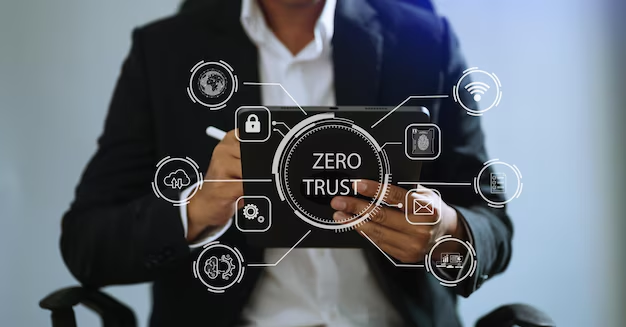
The old guard security model that assumes a secure perimeter no longer holds today with all this connection. Remote work, mobile devices, and cloud-based systems have burst the bubble of who one can or cannot assume safe enough because of the broadened attack surface, giving birth to the zero-trust model. Zero trust, reinforced by trust badges, assumes that no single person or device, inside or outside the network, should be trusted by default. Instead, zero trust requires constant verification and strict access controls, often indicated by trust badges, to limit lateral movement across networks.
Zero trust architectures form an integral element of 2024 cybersecurity strategies. These include multi-factor authentication (MFA), micro-segmentation, and monitoring in real-time to deny only authenticated users from accessing specific resources. Organizations embracing zero-trust ideals such as secure cloud storage plays a critical role in zero-trust cybersecurity strategies by offering encrypted environments where only verified users can access sensitive data. will be far more poised in confrontation with modern threats, such as insider attacks and privileged account breaches.
6. Cyber Resilience and Disaster Recovery
The increasing focus on cyber resilience is based on the fact that prevention of all attacks is not possible. It must be a quick recovery from breaches, and the impact of attacks should be minimal for organizations. Cyber resilience is the ability to anticipate, withstand, recover from, and adapt to adverse cyber events. Such encompasses not only strength in cybersecurity but also an adequate disaster recovery plan with regular data backups, exhaustive incident response protocols, and testing of resilience . Best way to make sure your cyber resilience is up to scratch? Hire the services of a cybersecurity consultancy to do the hard work for you.
Business houses in 2024 will spend more on cyber insurance to indemnify financial losses from breaches. More governments will demand sterner compliance requirements. Cyber resilience will be very important as attacks are becoming increasingly sophisticated and frequent.
7. Third-party and Supply Chain Vulnerabilities
Supply Chain Cyberattacks. The number of attacks on the supply chain has increased dramatically, as hackers have found that they can often gain access to a smaller dramatically, as hackers have found that they can often gain access to a smaller, less secure vendor to get into even a large enterprise. This style of attack exploits the connectivity of modern business in many ways, often where third-party vendors may have privileged access to systems. Companies need to recognize that this gap will require them to focus on building up third-party risk management programs. Another critical but often overlooked risk is the compromise of service accounts—non-human accounts with privileged access that attackers exploit to move laterally within networks undetected. That includes thorough vetting of vendors’ postures when it comes to security, monitoring for vulnerabilities, and forcing contractual obligations related to cybersecurity best practices.
8. Regulatory Compliance and Cybersecurity Legislation
Data security regulation requirements evolve with changing cyber threats. Governments are enforcing new and stiffer legislation to compel companies to protect customer data as well as report the incidence of breaches. For example, the European Union’s General Data Protection Regulation, or GDPR, has been more of a world influencer on data privacy standards. Conversely, in the United States, there have been strong privacy laws enacted in several states, including California.
In 2024, businesses will have to be in compliance with a far more complex regulatory framework than exists today, meaning they will have not only met the very basic requirements of cybersecurity but also industry-specific requirements, such as HIPAA for health care or PCI DSS for financial services. Using HIPAA-compliant forms for data collection ensures secure handling of sensitive patient information, keeping organizations aligned with legal mandates while building trust with customers.
9. Social Engineering and Scam Attacks
Even while the technological world advances, the role of social engineering continues to escalate. Cyber-criminals continue to play with psychology where vulnerable ones are duped to expose their sensitive information or any other action that compromises security. Spear Phishing attacks remain highly effective, accounting for much of their efficacy and wide use, piercing even the most advanced technical defenses.
The way to counter social engineering is through security awareness training, but old-fashioned training programs may not be enough, and businesses look toward more innovative approaches, from gamified simulations to continuous education, in order to keep employees vigilant in a changing landscape of tactics.
Ethical Hacking and White Hats

White-hat hackers or “ethical hackers” are being hired to check system flaws before malicious users can exploit them. Practitioners are talking to companies about running bug bounty programs and hackathons, and companies are paying hackers to find potential security vulnerabilities. This proactive approach helps them stay one step ahead of the curve by constantly stress-testing their defences.
Future of AI and Cybersecurity
The future of AI roles in the cybersecurity construct is in development. Organizations are expected to lean more and more on AI tools when it comes to automating their detection and response processes when cyber threats arise. However, AI can identify anomalies in user behaviour or network traffic in real time, which aids in faster interventions. For instance, a deepfake could even mimic a conference photographer to gain unauthorized access to sensitive events or restricted areas, highlighting the need for advanced security measures. As AI tools become more sophisticated, so could AI-driven attacks like deepfakes be used to impersonate individuals or organizations in cyberattacks.
Conclusion
High technology transitions and corresponding rises in complexity within cyber threats characterize the future of cybersecurity. As AI lends its support to both sides of defence and attack, organizations must keep increasing their investment in proactive measures. It’s full of digital challenges constantly demanding adjustment from cloud security and IoT vulnerabilities to zero trust architecture and cyber resilience. There will be a bigger role for regulatory pressures in defining cybersecurity strategies for 2024 and beyond, including third-party risk management. Willfulness and activity combined with integrity will define such a road ahead, ensuring that online activities are secure against dynamically shifting threats.